


FINANCE_LAB
What's shipping today
Our QML work lives in the finance_lab workspace: generative models for synthetic financial data, HMM-labelled market regimes as conditioning variables, and an architecture search over tree and quantum models. Each item below is code in the repo today — screenshots are real outputs.
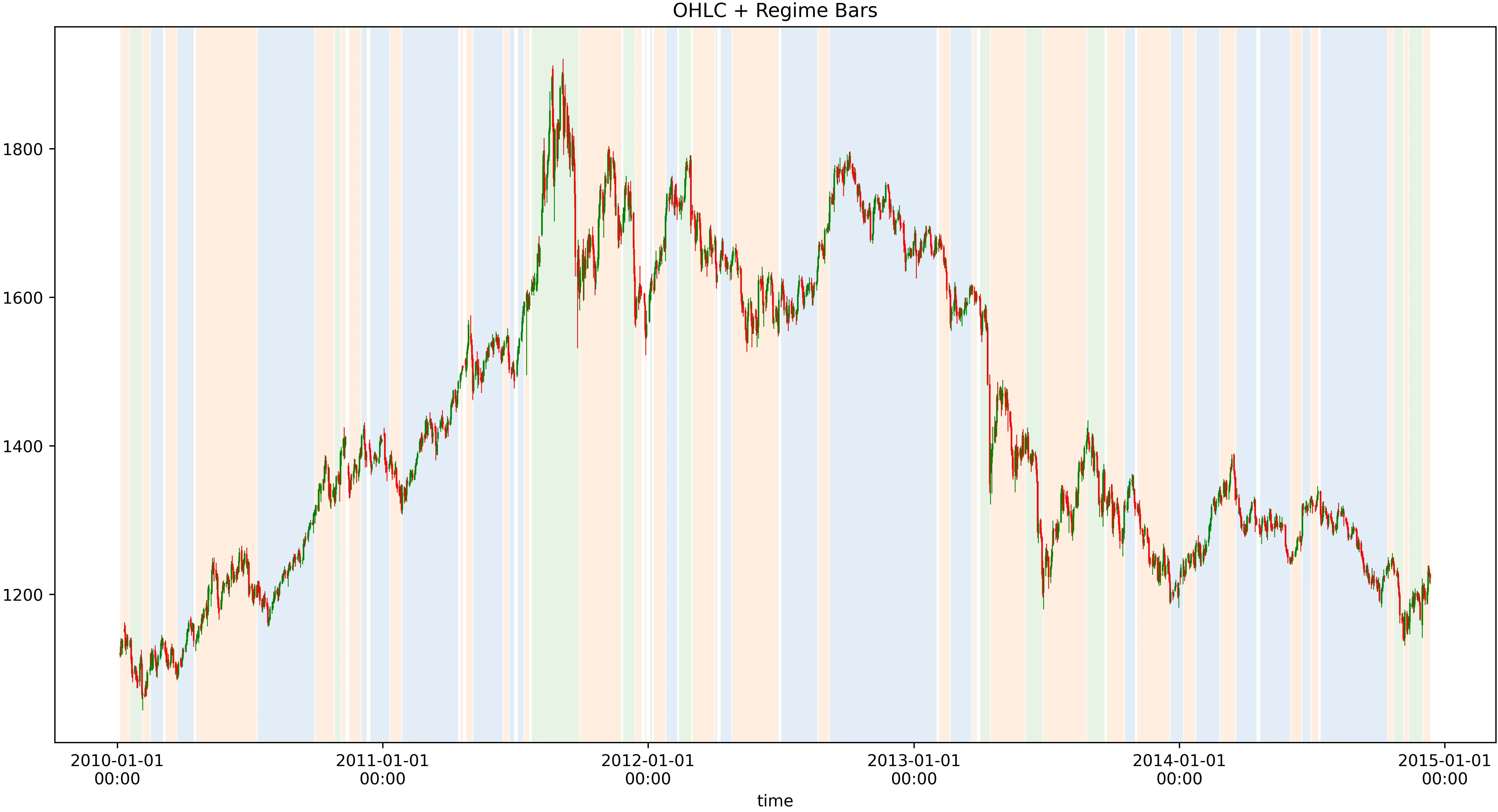
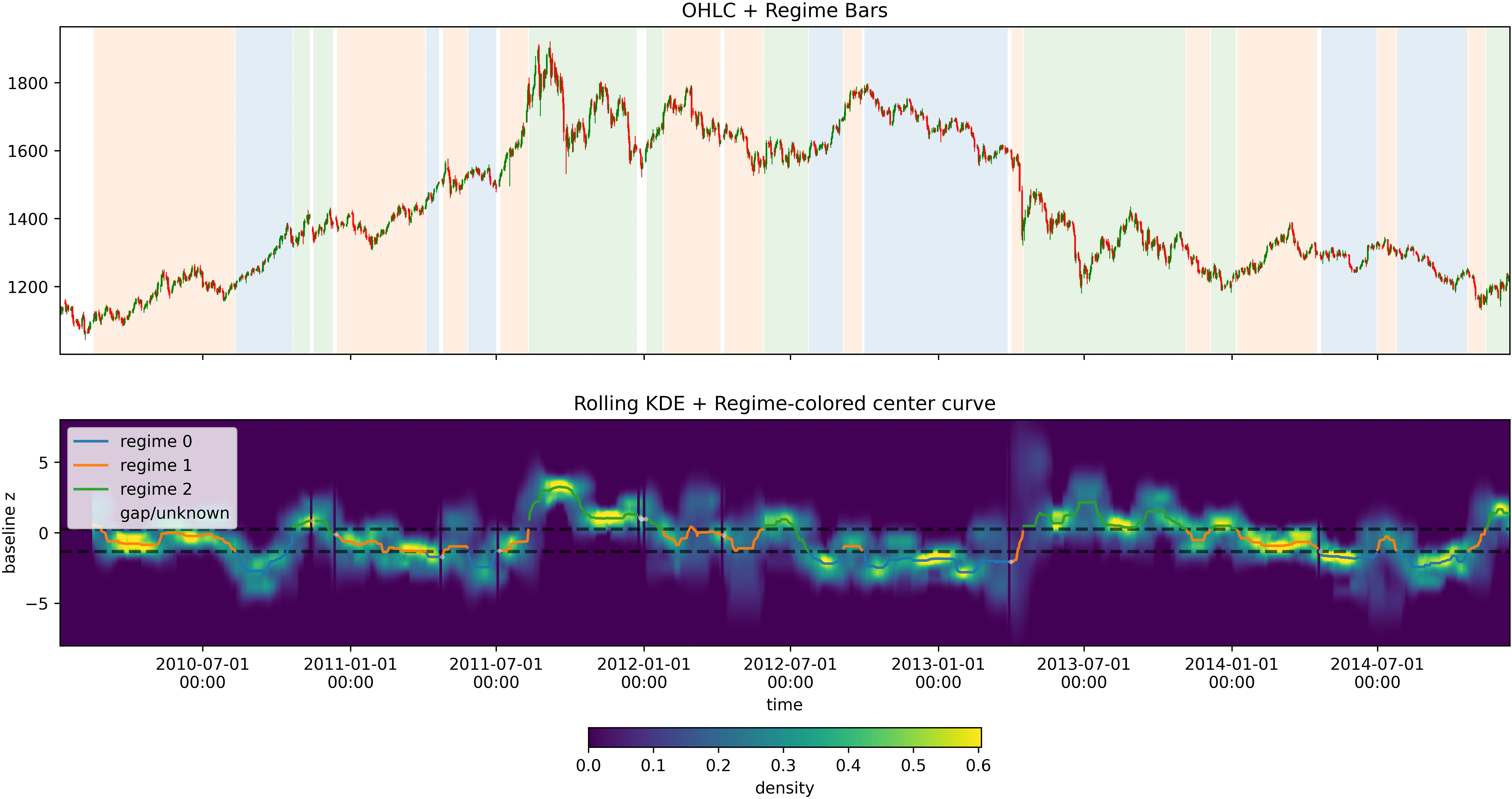
HMM regime labelling
Rolling realized-volatility + skew + cross-correlation fed to a Hidden Markov Model; regimes become conditioning variables for the generative models and classifiers downstream.
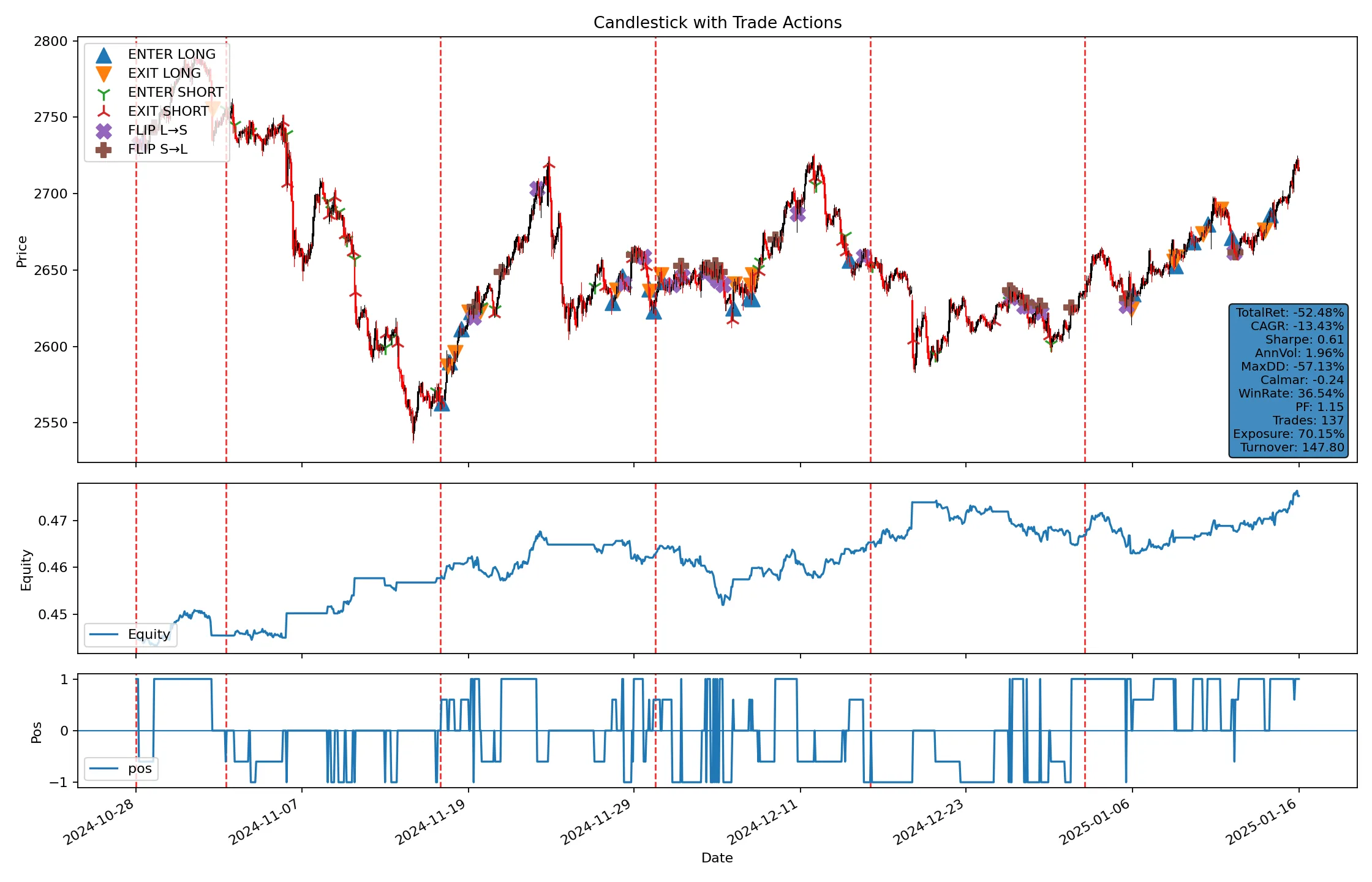
Conditional TimeGAN + QCBM
Conditional TimeGAN with a Quantum Circuit Born Machine noise source for regime-aware synthetic market data; used to stress-test strategies on scenarios that do not appear in historical windows.
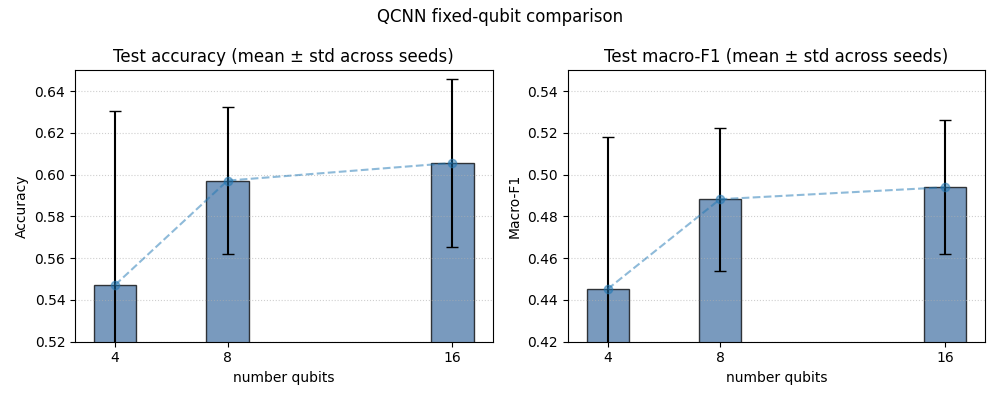
Architecture search
Optuna-driven hyperparameter search across tree, neural, and QCNN models, scored with walk-forward cross-validation. The chart shows QCNN macro-F1 optimisation over trials.
QUANTUM TOOLKIT
Moving into the Quantum toolkit
The QML building blocks are being factored into the closed-source Quantum toolkit that sits on top of Omega Functions. This is what the toolkit ships today:
- Statevector simulator with mid-circuit projective measurement and reset
- `QuantumLayer` integrating with PyTorch via tch-rs — parameter-shift gradients flow through tch autograd
- Pure-Rust CMA-ES gradient-free optimiser for noisy or non-differentiable loops
- Surrogate trainer implementing arXiv:2505.05249
- QML encoding layers: angle, IQP, hardware-efficient
- circuit! DSL and Aria surface DSL — symbolic parameters + annotations that export to Lean 4 / Rocq
The Quantum toolkit is closed source; the underlying Omega Functions runtime is open source at github.com/Anzaetek/omega-functions-public.
Where QML earns its keep in finance
Synthetic data for stress testing
Regime-aware synthetic time series let you stress-test strategies against scenarios outside the historical window. QCBM captures heavy tails and asymmetric joint distributions that classical GANs average away.
Regime-conditioned signals
HMM regime labels feed classifiers that route trading logic per state. Same infrastructure used for execution, risk, and synthetic-data conditioning.
Sparse-data classification
QML models train on the low-data regimes that finance actually has — hundreds of labeled crash days, not millions. The inductive bias of variational circuits helps when classical deep learning overfits.
Walk-forward validation baked in
Architecture search runs walk-forward cross-validation by default — no data-leakage single-split validation bars that flatter tree models and fall apart in production.